
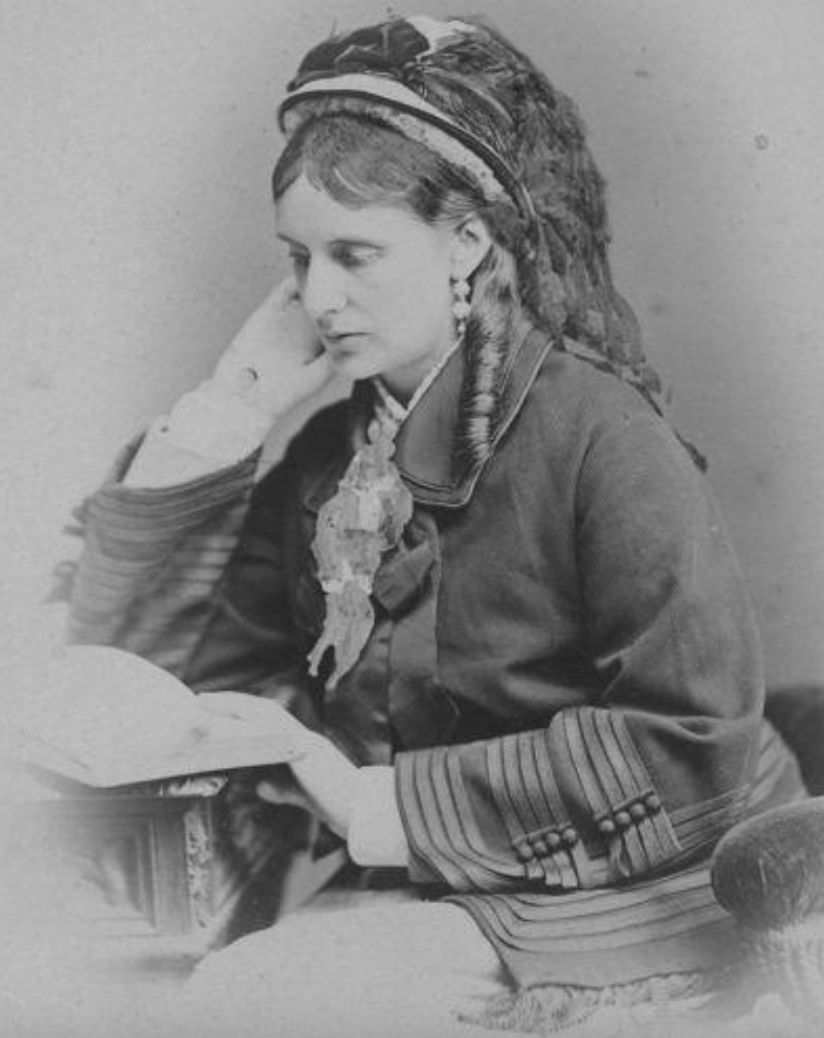
Josephine Butler was a courageous activist who befriended prostitutes and called the men and women of England to listen to the cries of the oppressed and marginalized, using the Bible as her entry point.
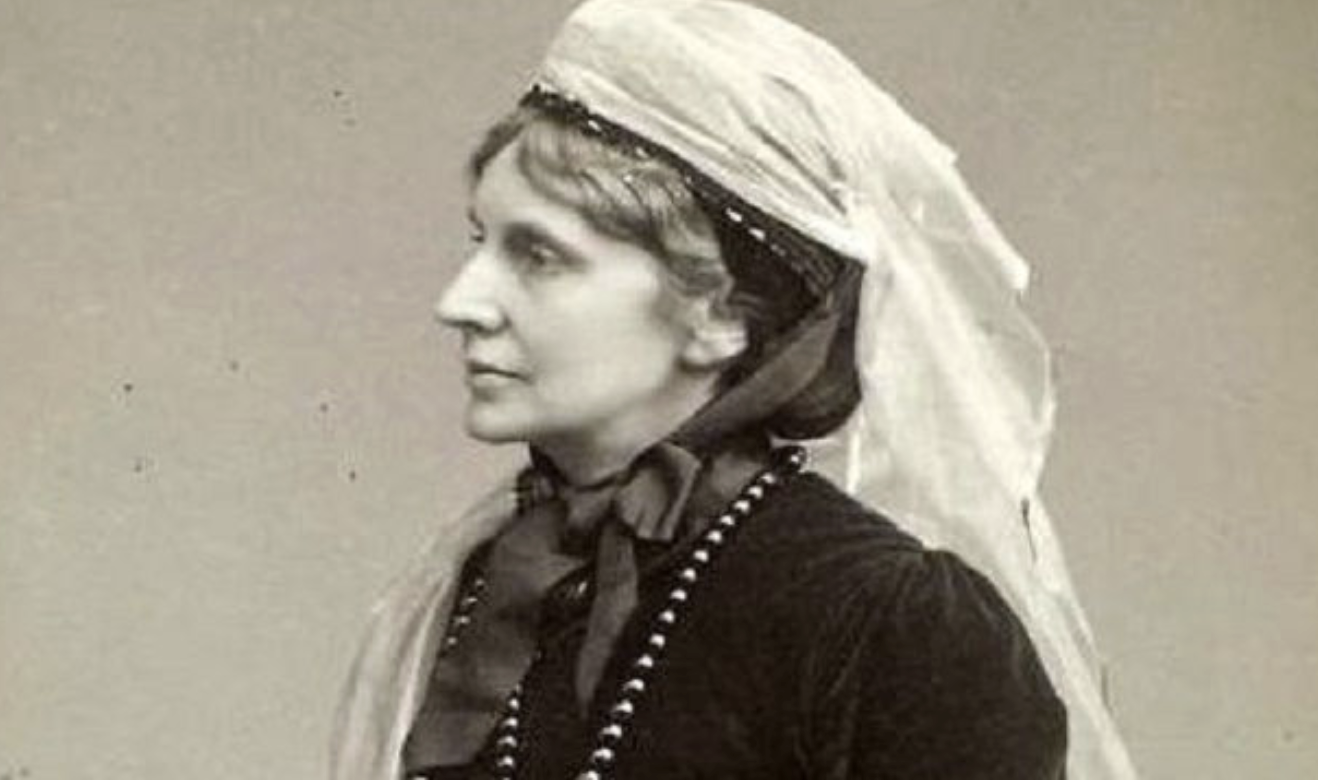
Josephine Butler — From darkness to light: Embracing texts of terror. In this podcast, Dr Marion Taylor and Kira Moolman talk about the life and work of Josephine Butler, a nineteenth century Christian who advocated for the rights of women, especially the welfare of prostitutes.
I’ve transcribed the segment of the podcast which describes how Josephine Butler expounded three Bible narratives to arouse the empathy of “respectable” English men and women and call out class and sex discrimination. The three Bible stories she expounded are the Levite’s concubine (Judges 19), the prostitute who washed Jesus’ feet with her tears (Luke 7:26-50), and the woman who had an issue of blood (Luke 8:43-48). She wove those stories together to implore her audience to wake up and become active in bringing justice to women who are abused, oppressed and stigmatised.
 [Begin transcription]
This is what she says to a large crowd of 400 women in 1870. She rehearses the details of what she calls, “The ghastly story of the clamouring of the sons of Belial around the door, the suspense, the parley, till in cowardly self-defence the man brings out the defenceless woman and casts her among the hellish hordes of that awful night.”
So, you can imagine what these 400 women are thinking. They probably haven’t heard that story in a long time, or read it, but maybe they have, maybe they read their Bible regularly. They wouldn’t have heard this in that way. And so, using the text as a mirror, she dramatically says,
There is a weak and prostrate figure lying at our door. To this door, she turns for help, though it be her dying fall. Her hands are on the threshold. Dead hands, flung forward in mute and terrible appeal to the God above, who, looking down from heaven, sees not that prostrate form alone, but on the one side the powers of hell, and on the other, in their safe dwelling place, the selfish sleepers to whom the pale cold hands appeal in vain.
So she’s put herself into the story and imagined what it was like for this woman, with her hands flung to the door, saying, “Help me! Help me!” — and the people in the house are sleeping. So she’s saying to the audience: “You women are on inside of the house, ignoring the plight of the prostitute who is crying for help.”
She needed to get the audience to empathise with the plight of the woman. And she does that by going to stories in the New Testament and how Jesus treats the women who were prostitutes. … she uses the Luke story of Jesus being anointed by the immoral woman of the city who … kissed his feet and then Jesus forgave her. So she says, “Jesus treats a woman in that way. So what about you?”
Then she talks about Revelation 3:20 which is that verse where Jesus says, Behold, I stand at the door and knock. She [juxtaposes] that verse about Jesus by the door with the story where the woman is by the door, and she says, “Where is Jesus in this story?” And she says Jesus is with the woman.
So again, she’s bringing Jesus into this place, and reminding the audience how Jesus treated the marginalised and the outsiders and the sexually promiscuous [which] is not how we are treating them as men and women in England.
Finally, she brings in the story of the woman who has the issue of blood touching the hem of Jesus’ garment in Luke 8. Then she says, “The cold faint hands of the woman who’s dying, falling on the threshold, groping hopelessly, have stolen in the darkness some of the virtue from Jesus’ garment hem.” So she puts Jesus there and blends those stories and says, “The woman met Jesus in that moment.” Now that’s not what this story says in the Old Testament, but she’s reading within the whole context of scripture, and she’s reading it as a type. And she’s wondering, what is the message of that horrible story in the Old Testament for today? And she says it’s a story that can be life-giving if we respond.
It’s women in her audience here, but 20 or 30 years later (and she does it all the time) she gives this talk to a mixed audience. So she’s saying, “Men and women, we’ve got to do something!”
[End transcription of 37:25-42:06 of Josephine Butler — From darkness to light: Embracing texts of terror.]
My video The Levite’s Concubine — A Case Study in how Abusers Recruit Allies gives another application of Judges 19. My application is harmonious with Josephine Butler’s in that both she and I call out the sexual double-standard.
The prostitute — understood by Victorian culture as refuse — became for Butler a sign not only of grief and pain but also of Jesus’ identification with the excluded.
— The Praying Feminist1, by Sarah C Williams
In this audio interview Dr Marion Taylor explains how she started to uncover the lost works of women interpreters. Go to time mark 39:30 to hear her talking about Josephine Butler.
A final thought
Jesus is with the fallen concubine outside the house.
How is he with the selfish sleepers on the inside of the house?
He is admonishing the selfish sleepers on the inside of the house to wake up from their selfishness, learn how to properly help victims, gird their loins, and come outside the house to labour for justice for the oppressed.
Footnote
1In Sarah C Williams article, The Praying Feminist, she mentions a book by Elizabeth Gaskell titled Ruth. For an Internet Archived PDF copy of the book, click here [Internet Archive link]. Please note that in the PDF copy of book, the title of the book is The Ruth, not Ruth. There are a number of sources for free internet copies of Elizabeth Gaskell’s book, and some have the title Ruth, and some have the title The Ruth.
From Wikipedia [Internet Archive link]:
Theme
The book is a social novel, dealing with Victorian views about sin and illegitimacy. It is a surprisingly compassionate portrayal of a ‘fallen woman’, a type of person normally outcast from respectable society. It examines the social stigma of illegitimacy. Ruth goes on to gain a respectable position in society as a governess, and the novel looks at whether the sinful can be reintegrated into society.
Literary Significance and reception
Ruth received a mixed critical reception. As a work that dealt frankly with seduction and illegitimacy, it inevitably attracted controversy: Gaskell reported that it was a “prohibited book” in her own household, that friends expressed “deep regret” at its publication, and that two acquaintances burnt their copies.”
***
Further Reading
Society has been hoodwinked by men who abuse their female intimate partners
Discover more from A Cry For Justice
Subscribe to get the latest posts sent to your email.


My initial comment….
From the article The Praying Feminist (linked to in the original post):
One of the many things I liked about the article was the above paragraph….I’ve read many books (both fiction and non-fiction) about Victorian England and other historical times. In those books, people learn about themselves, their own blind spots and biases, the hypocrisy of others, etc. The characters in the book actually age and grow older, unlike many of the formulaic novels. I learned a LOT from ALL those books! 😊
It is from the title of one of those books that I came to prefer the term “whited sepulchre” rather than the terms “white-washed tombs”, etc.
LikeLike
Adding on to my comment of 3rd August 2023….
From the transcription quoted in the original post:
(The phrases “or sometimes the woman”, “or sometimes defenceless man”, and the word “him” in brackets were added by me.)
This sounds exactly like what an abuser does to their victim.
LikeLiked by 1 person
Adding on to my comment of 3rd August 2023….
From the transcription quoted in the original post:
(The phrases “or he”, “or his”, “the people”, “and / or men” and the words “man” and “his” in brackets were added by me.)
That.
LikeLiked by 1 person
Adding on to my comment of 3rd August 2023….
From the transcription quoted in the original post:
(The word “which” in brackets was added by Barb in the original post. The phrase “anywhere else in the world” in brackets was added by me.)
That.
LikeLike
Adding on to my comment of 3rd August 2023….
From the transcription quoted in the original post:
(The words “the” and “was” in brackets were added by me.)
That.
LikeLike
Adding on to my comment of 3rd August 2023….
From the transcription quoted in the original post:
(The bold was done by me.)
That.
LikeLike
Adding on to my comment of 3rd August 2023….
From the original post:
That.
LikeLike
Adding on to my comment of 3rd August 2023….
And thank you, Barb, for including all the information and links that are in the footnote of your post. 😊
LikeLike
From the post:
I was physically a virgin until I got married, but for years before and after, I felt dirty, discarded and despised on the inside. Being abused at home, bullied at school meant I was a constant target for negative attention. Much of the abusiveness came from the male gender (father at home, boys at school), so they convinced me that I was only worthy of negative attention. I was considered too “ugly” to be treated with basic human respect, so a so-called “ugly subhuman” would only look uglier and less human, should I dare to cry out for help.
You try to bear the shame with dignity, but since shame strips you of your dignity — you try to suffer in silence, and keep those screams of pain suppressed. You might try to whisper for help every now and then, or silently plead with your face or eyes — but in my experience, watching them turn away or refuse to look at you at all, kept reminding me that there was no point in using my voice.
Girls / women were no better, by the way, so that also led me to believe that I wasn’t considered attractive enough to “dodge” those bullets. Being made to feel ugly on the inside and outside, despite technically being a virgin, does not make any girl / woman feel emotionally or spiritually pure. There is nothing to celebrate being chased after because you are considered “attractive”, BUT when your “unattractiveness” supposedly chases people AWAY from you, and the only attention you get is to remind you of how unattractive you are — well, such a dehumanizing childhood leads to a very difficult adulthood.
While I did not live even close to the life of ANY of these women described in the Word, I have caught miniscule glimpses. Abusers “use” their victims for the sole purpose of their narcissistic pleasures, and the victim is treated as disposable, certainly denied of their basic human rights.
(continued in next comment!)
LikeLike
Helovesme,
I read and re-read your first comment of 6th September 2023….the one in which you wrote:
I’ve only ever considered you beautiful, Helovesme….I’m so sorry for how other people treated you. 😢
You wrote:
And I’ll reply to your next comment separately. 😊
LikeLiked by 1 person
The woman with the flow of blood both intrigues and inspires me. Bit of TMI [Too Much Information] ahead; I will try to keep it “tame!” I have always had heavier menstrual cycles. I wasn’t taught much about how deal with my cycle, so figuring out how to properly care for myself, how often to change my pads, how to avoid accidents, was a difficult ordeal.
I was in band for most of my years, and at a middle school concert, where I knew I’d be sitting for several hours, I tried to use two overnight pads in order to avoid any accidents. Apparently that didn’t work, but I didn’t know that my peers had noticed it as well, and some cruel girls decided to make fun of me the next day about it. One boy even dared to ask me, why I didn’t wear a tampon. Words cannot express the shame, even as I type this out a good 35 years later. Not just because of my youth, but because having heavier cycles was out of my control.
I have no idea what kind of feminine products were used / available in Jesus’s time, but imagine TWELVE years of such bleeding, fairly consistent I believe. She must have felt like / been treated like a pariah, even though she tried to get help, spent all her money. But I wonder how the women of that day treated her. Those with monthly cycles of bleeding, just might be in a position of empathizing with her. For some reason, I have little hope that she was treated humanely by her own gender.
I’ve had women make offhand but uncomfortable comments about the size of my breasts, and / or show little to no empathy for my heavier periods and the various symptoms that often accompany it. When I was in my childbearing years (even though I never got pregnant), it would take a long time to describe similar comments about my lack of reproduction. No matter what, women only saw me through chest size, and an empty womb. Nowhere in there was my soul, my intrinsic worth, something you can’t see, but should not HAVE to see, in order to recognize.
I don’t want to leave it as if I am “demonizing” the female gender; believe me, I have not gotten treated much differently by the male gender. I personally found that men seem to feel like they “own” women’s pelvic area, and have every right to control it, as well as women. My father was my abuser, physically and verbally, which obviously made me feel like I was his property to berate and bully as much as he pleased. But when he too would join the chorus of “why wasn’t I having children”, it was confirmation of yet another part of me that he felt entitled to control. But this time, I could give him something more so on the positive side: a grandchild. Something that might actually please him, for once in my life.
I did not fall for that, because I never heard him say once (or anyone else, for that matter), that they believed I would be a good parent. I just think my dad (and my mom) wanted to do what they thought I was supposed to do: get married and have kids. That is NOT too dissimilar to the typical church thinking. That is how a human girl / woman is supposed to “function” to want and / or do those things. But absolutely no one asked me what I thought, or wanted, or most importantly — what the Lord’s plan for my life might dare to be. I had no voice, and when I tried to whisper, or plead with my face or eyes, I was yet again ignored or invisible. So I silently screamed, or silently stayed silent. I could not even figure out how to find the words to make them understand, and I was too scared to even try. I felt like I had a broken incubator, and was therefore an entirely broken woman. So “throw me away”. Having heavy periods made me “gross”. Having NO periods while incubating a human life, made me “gross” as well. No one really wants to be seen with either kind of girl / woman.
These are again miniscule glimpses of what this woman may have experienced. I would never be so bold as to put myself in her category. BUT, I have to give a huge high five to Josephine Butler! She was far behind me in historical time, but her thinking was way ahead of her time! Her kind of heart and soul from the past, is badly needed in present day.
LikeLike
Helovesme,
Your second comment of 6th September 2023 (this one that I’m replying to)….I read and re-read it as well. And, as with your earlier comment, my heart breaks knowing how you were treated….
You wrote (6th September 2023):
(The phrase “Until I was about 20 years old” in brackets was added by me.)
That.
You wrote:
For younger readers: There wasn’t anywhere near the variety of feminine hygiene products available then that are available now….
I used to come close to having accidents when I used pads — and they were big and bulky, and it was difficult to hide the fact that one was wearing them. I discovered tampons at a fairly young age — a VERY good find, considering I was a competitive swimmer, and one can’t wear a pad under a bathing suit — my Mum was NOT pleased with my discovering tampons! But for me, it was a blessing….I had to use two tampons at a time and they’d only last about 3 hours.
It’s over five decades later, and I started wondering as I was writing my reply to you, Helovesme….there was an older swimmer (maybe between 15 and 20 years old?) on my swim team who got teased unmercifully when she had an accident. I don’t know if maybe her cycle had just started, if maybe she didn’t know about (or wasn’t allowed to use) tampons, or if maybe whatever feminine hygiene product she’d used needed to be changed. People were so cruel to her….
One thing I remember so clearly….while my Mum disapproved of my using tampons, one of my brothers (who’d have been in his early teens) — one that I’m now in regular contact with 😊 — had offered to go to the store for me to buy me some tampons. And this was about five decades ago, at a time when men (let alone boys!) “didn’t do such things”.
You wrote:
Perhaps we can hope that there was at least one person (besides Jesus) that treated the woman with the issue of the blood humanely. 😊
You wrote:
(The word “people” and the phrase “some people” in brackets were added by me.)
That.
One of the worst symptoms I had were VERY painful menstrual cramps. I had people who didn’t believe me when I said that if I didn’t sit down I’d pass out. One of the few who believed me was the school nurse. When I wobbled my way down the hallway from math class to the nurse’s office, the first thing she did was sit me down and put my head between my legs so I wouldn’t pass out. My Dad had to come to school to take me home….and in my later teens, all he could say as I writhed in pain from menstrual cramps on my bed, chewing my sheet so I wouldn’t make any sound and disturb the family’s Easter breakfast, was: “It’ll be OK.”
You wrote:
My chorus of “why wasn’t I having children” came from more than one person….two I remember most clearly….
One was my Mum….until I wrote her a letter, telling her my (now ex) “husband” and I weren’t having children.
The second was a client of mine who — after some discussion about my not yet having had children — I replied in a rather smart-alecky tone of voice (paraphrasing): “After thirteen years of marriage, I think we’ve figured out how to not have children!”
You wrote:
(The word “me” in brackets was added by me.)
That.
You wrote:
(The phrase “we, Helovesme and I” in brackets was added by me.)
That.
LikeLiked by 1 person
Thank you so much (yet again!) for such kind and comforting words! I sincerely wasn’t sure if my second comment would be approved out of understandable concerns of victims being triggered. Even though the language was fairly tame, events concerning our reproductive areas might bring back victimizing, ugly memories for others. I was especially grateful to remain anonymous as I shared those agonizing incidents.
It is actually quite nice to get to know people a bit more personally; like finding out you were a competitive swimmer, as well as how menstruation was handled in your upbringing. For those who were raised a few decades ago, I’ve noticed that it was quite common to not have been described or discussed as it should have been.
I SO wish I could use tampons; you are totally right about “big and bulky” pads! But I had no idea how to use them, but well into my adulthood I tried to use them, and my flow was just too heavy for them. For things like swimming, pads aren’t optional, so I am so glad you were able to discover tampons on your own.
Even in my adulthood, accidents still do “happen”. The circumstances vary, but it is not like the chance of mishaps disappears as you get older and get used to having one. So I have nothing but sympathy for the classmate you described, despite my schooldays being far behind me. I am so sorry she experienced even one ounce of ostracization.
You wrote:
I used to have very difficult cramps as well; they have eased up as I got older, but other unwanted experiences took their place. For about a year or so, give or take, I had agonizing, nearly unbearable (fear of dying) cramps BEFORE my cycle would start. I would be curled up in the bathroom, trying to “breathe” through them. And each month I had no idea what to expect: they went from somewhat mild to sheer misery. It has been maybe a year or so, that they suddenly and unexpectedly ended. So it wasn’t that long ago. We never found the cause, but my body (in general) over the last few decades, was known for “wackadoodle” but extremely painful incidents that came and went with no diagnosis, no idea why they started or why they ended. They made me feel like a “freak”. Not being able to figure out what was going on, also made me aware that those incidents might come back sometime, anytime — again, with no warning and certainly no idea if / when they’d start OR stop.
I was shocked but not shocked to read about girls / women in more undeveloped countries who don’t have proper feminine products for their cycles, and there is no one to provide them. So, the girls might just quit going to school as a result. I have also discovered that having a period might make you perceived as “unclean”. As much I understand the literal feeling of being unclean on the outside, it is quite another thing to be treated as unclean on the inside.
I live in America, supposedly a developed country: when I had that accident in middle school years ago, believe me, I felt like quitting school after I had an outward accident, AND I felt ashamed and unclean on the inside. And feeling shamed and shunned like that, puts a damper on how you perceive yourself. No matter what, you can live in a first world country with third-rate thinking.
I am with you; I SO hope that woman with the flow of blood was treated humanely. But doctors shaming their patients simply for suffering, is a real thing and I can only imagine that it was just as real back then, too. I had no idea how vulnerable and even violated you can feel when your symptoms are being dismissed or disregarded. Or they quickly assume you are to be blamed for your pain, which most often isn’t quite the case.
Christ took the time to find out who had touched Him, even though she understandably didn’t want to be noticed! Even though He was (I believe) on His way to help a dying little girl. She tried to stay hidden, but eventually came forward. By no means was He trying to embarrass her; I think He wanted her to embrace the freedom she now had in being healed. You can “rejoin” society, mingle with people, and of course, suffer no more (from her condition). Not to mention the monetary benefits of being able to spend money in order to live, not in order to stay alive.
LikeLiked by 1 person
Helovesme,
You wrote (11th September 2023):
(The word “menstruation” in brackets was added by me.)
That. And it’s helpful for people to remember that the ages of onset and cessation of menstruation that most people refer to (especially the medical profession) — and consider “normal” — are NOT always accurate.
I started menstruating at a much younger age (eleven) than was considered “normal” at the time (keeping in mind that I’m into my sixth decade). I was perimenopausal for quite a few years — peri-menopause is the years immediately prior to menopause and can last up to ten years. I finished menopause — one year without a menstrual cycle, and the one year without a menstrual cycle is not a result of a health issue, illness, etc. — when I was almost halfway through my fifth decade (the “normal” age was considered to be fifty-one).
And before I continue with excerpts from your comment, Helovesme….I’m so sorry you’ve had such awful experiences with menstruation. 😢 My personal experiences pale in comparison.
You wrote:
And you wrote:
And you wrote:
(The bold was done by me.)
I’m assuming, Helovesme (and no offence or insult to you or your doctors intended), your doctors tested for different kinds of hormonal imbalances. Not only the “expected” hormones like estrogen, etc., but also the various thyroid hormones.
You wrote:
Having read every comment you’ve written on the ACFJ blog, Helovesme 😊….have you and / or your doctors considered taking into consideration the effects of your history of abuse (by your dad, by school bullies, etc.)? Have your doctors considered the effects of PTSD? Many doctors are unfamiliar with PTSD, and are completely unfamiliar with how each individual is affected. Let alone how completely differently each person can be affected — not only in comparison to other people, but how an individual can have different responses to similar stimuli, imbalances, etc….especially if they have PTSD or Complex-PTSD.
You wrote:
That.
You wrote:
(The phrases “many people” and “other people” in brackets were added by me.)
That.
You wrote:
(The phrase “the woman with the issue of the blood” in brackets was added by me.)
That.
You wrote:
(The phrase “the woman with the issue of the blood” in brackets was added by me.)
I love the way you wrote about Jesus — what He might’ve been “saying” to the woman about rejoining society, mingling with people again, not suffering from her condition anymore….and her being able to spend money on actually living, rather than just surviving. 😊
LikeLike
Thank you again for your wonderfully warm comments! I read them almost right away but am only replying to them now!
No offense taken about my medical issues! For privacy purposes, I won’t say much in detail in reply, only that YES some of those things apply to me and some of those things we aren’t sure if they apply to me. I had no idea how enduring yet exhausting our minds and bodies can be.
Every now and then when I see or hear myself able to laugh or smile or experience joy for a split second is a reminder that there really is more to my life than what I’ve suffered!
LikeLike
The post mentions three women in the Word who had no names, and we only know a small portion of their stories. A wonderful brother in Christ once asked who we’d like to speak to, or hear from, in the Word. I thought a lot about it, and here is what I think:
I’d like to hear from anyone and everyone whose names we both DO know, and do NOT know, but we do not know their full stories. Let them speak not only their names (where applicable), but also tell their own stories in their own words.
With these women in particular, we know so little and tend to infer so much. We try to humanize them as much as possible, and do it as well as possible, but it is still not the same thing as using their own voice to speak from their own hearts.
Sometimes as children, we name our toys or stuffed animals, in order to personalize their existence to us. Parents name their children in order to do the same. But no matter what, our voices are our own. Speaking for ourselves is a just as important as having a name for ourselves.
Many times it is like we are just here to take up space, and desperately we try to not let our existences cause too much trouble. We try to not get in anyone’s way and stay out of everyone’s way as much as possible. This includes our traumas, or at least the stories we don’t want our “names” attached to.
Those women had names given to them, but they had their names taken away from them as well. Traumas have a way of taking away your identity, which can include your actual name. That is replaced by whatever experience has defined you. You are no longer, say, named and recognized as Katie. Now you are named and recognized as “victim of abuse”, “victim of your abuser” (insert his / her name here).
But when you tell your story, in your own words and in your own ways, I think that is a way to reclaim your name. If these women got a chance to tell their whole story about their whole lives, not just the traumas they endured, we wouldn’t so easily and readily define them as a victim, or a prostitute, or a patient.
You know, victims hopefully have SOME joyful, interesting, humorous, anecdotal memories to share, not just the worst of what humanity did to them. We might see more of their unique personalities emerge.
I know my own name, but I have a hard time with this. I DO have actual pleasant memories in my mind and memory, but they are often buried underneath too many layers of bad memories that unfortunately, outnumber them in number and intensity. But every now and then I am reminded that I have certain quirks or sensitivities or traits that remind me that I’m fearfully and wonderfully made — and dare I say it, made in His image. That is something that makes you sit up and pay attention, I think.
To quote Janet Jackson’s well known song “Nasty”: “No, my first name ain’t baby. It’s Janet. Miss Jackson if you’re nasty.” The more you disrespect me, the more I will demand a higher level of respect.
I often think of it as: my name is not woman, wife, worker. My name is neither savior nor scapegoat. My name is not mom or martyr. My name is not victim or villain. My name is (fill in the blank). And don’t try to pull me down further, or I’ll hold you to a higher standard.
LikeLiked by 1 person
Helovesme,
You wrote (11th September 2023):
(The phrase “in the Bible” in brackets was added by me.)
That.
You wrote:
(The phrase “many people in the Bible” in brackets was added by me.)
That.
You wrote:
That. And I was laughing — and I’m still laughing — as I was modifying your above quote, Helovesme….what would our toys or stuffed animals say in THEIR own words, in THEIR own voices? 😊 We might — or might not! — want to know. 😊
You wrote:
That.
You wrote:
That.
You wrote:
That.
You wrote:
(The phrase “the three women in the post that Helovesme has been writing about in her comment” in brackets was added by me.)
That.
You wrote:
That. And I’ve had SOME joyful, interesting, humorous, anecdotal memories, although for my safety and protection I don’t usually write about (share) them on the ACFJ blog….and my unique personality DEFINITELY keeps emerging more and more. 😊
You wrote:
(Helovesme’s name in brackets was added — and the bolding of one of Helovesme’s phrases was done — by me.)
That….I’ve seen (and see) that when I read your comments, Helovesme.
You wrote:
That.
LikeLike
I love this comment by Helovesme.
Women in the Word who had no names is such a good phrase!
— ah, yes! And there are many possible reasons for not wanting our names to be attached to our stories. For example, many commenters at this blog comment anonymously because they don’t want their abusers and their abusers’ allies to identify them, since that might put them at higher risk of further abuse.
I recently came across a very interesting article which plausibly argues that Mary of Bethany (Martha’s sister) was Mary Magdalene. Here’s the link: A Retrieval of the Traditional View of Mary Magdalene From the Fringes of Theology [Internet Archive link] by Clement Harrold.
I’ve been thinking a lot about this article and the argument it makes. Personally, I find the case made by the article very plausible, other than one point in its argument (point seven).
In point seven, the author of the article suggests that Mary Magdalene made a fortune for herself during her profligate years prior to her encounter with Christ, and she saved that money — which later enabled her to help bankroll Jesus’s ministry and to purchase the pure nard which she later used to anoint Jesus with, a short time before his crucifixion. Having worked as a prostitute for about 8 months when I was 20, I know that prostitutes very seldom save any money from what their clients pay them. The money earned is usually spent quickly (in my case it was spent on heroin and taxis) or the money is taken away from the woman by pimps and abusers and thieves. I cannot imagine Mary Magdalene saving her earnings if she was indeed a prostitute before conversion. But I can imagine that she came from a fairly well-off family, and the jar of nard may have been a family heirloom.
One thing the article made me think about was the analogy between the parable of the Prodigal Son, and the story of Mary of Bethany. The prodigal son’s brother was peremptory and uncompassionate. He resented his younger brother’s conduct, and he resented the love his father showed to his repentant brother. Martha was similarly peremptory and uncompassionate towards her sister. She resented her sister’s conduct with Jesus, and I infer that she also resented the love Jesus showed to her sister.
LikeLike
Barb,
You wrote (21st September 2023):
I read your comment of 21st September 2023….I’d wanted to reply to you as I’d had a thought cross my mind, although I’d wanted to read through the article (A Retrieval of the Traditional View of Mary Magdalene From the Fringes of Theology, by Clement Harrold) first….the article you provided a link to in your comment.
I started reading through the article, and I’m finding it very interesting (and me being me, I’m looking up some of the Bible references 😊)….I stopped reading part way through because that expletive deleted spiritual warfare I’ve mentioned on the blog was interfering WAY too badly (omitting details for my safety and protection)….I didn’t want to disrespect (etc.) either you or the author of the article.
I WILL finish reading the article and I WILL reply more to you later. Hopefully sooner, rather than later. 😊
LikeLiked by 1 person
Hi, Finding Answers. I’m sorry that you’ve been experiencing a revisitation (if that’s the right word) of spiritual warfare.
LikeLike
Barb,
No offence or insult to you intended, Barb 😊 ….you wrote (1st October 2023):
Thank you, Barb….there are so few places I can write even a tiny bit about my ongoing (not revisitation of) expletive deleted spiritual warfare (omitting details for my safety and protection, as well as that of other people)….my version of expletive deleted spiritual warfare hasn’t stopped….but it will. 😊 And sooner, rather than later. 😊 I’d REALLY prefer NOW, but Jesus knows FAR better what I need….
LikeLike
:)
LikeLike
Adding on to my comment of 22nd September 2023….
I wrote:
I started re-reading the article A Retrieval of the Traditional View of Mary Magdalene From the Fringes of Theology by Clement Harrold, and stopped reading part way through the article….and not because of the expletive deleted spiritual warfare. The expletive deleted spiritual warfare is still ongoing, and I’m still in my version of “the pits of hell”, with the added “bonus” of ongoing variations in physical pain. I’m NOT writing this as a “pity party”….I’m merely writing it as a partial explanation as to why it’s been so long since I tried to re-read the article.
My apologies to you, Barb, and no offence to you intended….I stopped reading the article because I realized I didn’t have any interest in pursuing this particular scholarly bit of information. While I love research and learning, etc. 😊, there are some things I prefer to leave a mystery. There are so many possibilities for what Clement Harrold is writing about….
Barb, you wrote (21st September 2023):
I found this very thought-provoking. And as I was re-reading your comment just now, I wondered if — perhaps — Martha would’ve resented ANYONE that showed her sister attention.
I’ve probably written this somewhere else on the blog — I’d have been Mary, sitting at Jesus’ feet to learn. 😊
LikeLike
Hi, Finding Answers, I’m not at all offended by you choosing not to read the whole article A Retrieval of the Traditional View of Mary Magdalene From the Fringes of Theology by Clement Harrold. I respect your choice, and I understand your reasons for making that choice. :)
I think it’s possible that Martha would have resented anyone showing her sister attention.
When Lazarus’s dead body had been put in the sepulcher and Jesus returned to Bethany to comfort the grieving and raise Lazarus from the dead, Martha met Jesus outside while Mary was grieving in the house. Then Martha went into the house and spoke to Mary “privily” (quietly, sotto voce, secretly). Martha may have chosen to speak quietly to Mary at that moment, so as not to arouse the interest or interference of all the other mourners in the house. But another reason Martha chose to speak quietly to Mary might have been that Martha didn’t want to be showing to the other people in the house that she considered herself and Mary to be of equal value and worth.
LikeLike
Barb,
You wrote (11th October 2023):
(The italics were in the original comment.)
After I read your comment, I re-read through John 11….some of John 12….other bits and pieces of the Bible….Wikipedia (😊), etc. And I got to thinking….
Perhaps Mary of Bethany was an introvert and Martha (of Bethany) was a more practical extrovert….
How we see or understand Mary and Martha depends on our perspective, the Bible translation(s) we’re reading (or hearing if it’s an audio Bible, and then we might be influenced by the person who made the audio recording), the church(es) (or “churche(s)”) we’ve grown up in, etc.
I thought of authors who write a fictional account of someone in the Bible….the author takes someone from the Bible and imagines their life….kinda-sorta like historical fiction.
All I know is that I’d have been — as I wrote earlier — sitting at Jesus’ feet to learn. 😊
LikeLike
Sorry for my late reply, Barb! I also wanted to mention that I liked your comment so much from Sept 18th that I copied and pasted it to place it on my desktop, so I could read the words periodically. They really spoke a lot about the truth of trauma.
I had always been meaning to mention the “irony” that I spoke of nameless persons from the Word alongside the fact that we ourselves (except for Barb herself) use pseudonyms to comment and communicate with each other! I can only share as much as I do when I know I am “protected” by people not knowing my true identity. There are things I have shared here that I only felt safe to share about, knowing that my real name is not known.
I’ve never WANTED anyone to know my real name on this site, because IMO this site already humanizes those who comment on it. The pseudonyms are not a mark of shame for the fact that our stories exist at all, but are a mark of protection SO THAT we can share our stories!
But even with that protection in place, I still try to be careful about how much I share; and I truly appreciate the moderation this site has in place to watch out for us. I truly believe they are looking out for our best interests. And yes, the personality of the commenters truly comes through, despite the careful and conscious protections in place! You can get a good sense of who a person is, without knowing what their name is!
Barb wrote:
Of all of us, I would say Barb has shared so much of herself, and her story in order to encourage us to do the same (in whatever capacity we feel safe to do, choose to do). And since she shares her true identity as well as her true self, I am grateful that she sets an example for us to share freely about ourselves (within reason of course!).
I used to be far more freely public about my struggles, but now am much more fiercely private. That is not a totally bad thing at all; wisdom is directly linked to discretion and discernment. But I have felt either shamed or blamed when I took risks and shared certain things. OR, people ran away from me like I had a contagious disease! Or, worst of all, they weaponize what you share in order to “weaken” you, not strengthen you. It has made it harder for me to lower my guard for sure. I am far more willing to take a risk when I believe others will understand where I am coming from.
That was awesomely put! Recently I was able to share with Barb privately that I have struggled to read the Word for a few years now, and I think she is the only professing Christian I have shared that with. I confess that I held my breath just a BIT, waiting on her response, just a bit scared of a backlash. But she was so kind and understanding about it, and while that doesn’t mean I am GLAD for my struggle, I was so blessed by her compassion. It is not a struggle I am proud of; I have taken it to the Lord numerous times. She knows my real name AND showed me compassion: it doesn’t get any better than that.
So when anyone shares an interesting and incredible insight from the Word, I feel a little “fed” for sure. That is another “plus” from conversing with my fellow victims / survivors. Feeling just a little less “alone” as the wounds from being abused ebb and flow, helps me to not just accept but embrace His mercies that are new every morning.
LikeLike
Helovesme,
You wrote (1st October 2023):
That.
You wrote:
That.
You wrote:
That.
You wrote:
I’m not intending to devalue you, Helovesme, nor to diminish your experience when I say what I quoted (above) from your comment applies to many people….you are, in a way, speaking for many people. 😊
You wrote:
I’m so sorry you’ve struggled to read the Word, Helovesme 😢 ….and, when I read you’d contacted Barb, I was so happy — and I’m not surprised Barb was understanding and compassionate. 😊 And perhaps it might help you to know that many victims and survivors of abuse struggle with the Word….
You wrote:
That.
LikeLike
Finding Answers, thank you beyond words for these words!
It seemed logical, even obvious — but I think someone else had to state it before I would believe it. I cried to the Lord saying over and over again — the problem is not with Your Word, it is all in me. He never tried to use the Word to push me away or put me down; that is not Him at all.
But I would get so triggered and traumatized by certain passages; my poor mind couldn’t function properly, and as a result I myself could barely function at all. Even a small dose of empathy from another fellow Christian means SO very much — so thank you! You are absolutely in my prayers.
LikeLiked by 1 person
Helovesme,
You wrote (8th October 2023):
That. 😊
You wrote:
Thank you 😊 ….and you’re in mine as well. 😊
LikeLike
There is analogy between the woman who had the issue of blood, and women who have suffered domestic abuse and other types of abuse.
Women’s hearts bleed when they they have suffered domestic abuse, sexual abuse, spiritual abuse and systemic abuse by virtually the whole of society. Their bleeding hearts are usually invisible. It’s not safe for them to show their pain because most people usually misunderstand, misjudge and stigmatise them when they show their pain.
Constant bleeding from the vagina is physical, often obvious to others.
Constantly bleeding hearts are not often obvious to others. But the pain and stigma of the sufferer is similar.
Stigma — the etymology of the word comes from a Greek work meaning sharp point, so stigma is a mark made by a sharp point.
LikeLike
Barb,
You wrote (13th September 2023):
(The phrase “and sometimes men’s” in brackets was added by me.)
That.
LikeLike
Barb, that was so beautifully said!! Thank you so much for that!
LikeLike